



Parasite
Antiparasitics are a class of medications which are indicated for the treatment of parasitic diseases such as nematodes, cestodes, trematodes, and infectious protozoa.
Parasite Isoform Specific Products
All Product Categories
-
Parasite Related Products (2499)
Related Products (2499)

-
Related Compound Screening Libraries (1)
-
Parasite Isoform Comparison

-
Proguanil hydrochloride (Standard)
 0 ImagesCat. No.: HY-B0806ARCAS No.: 637-32-1Proguanil (hydrochloride) (Standard) is the analytical standard of Proguanil (hydrochloride). This product is intended for research and analytical applications. Proguanil hydrochloride, an antimalarial proagent, is metabolized to the active metabolite Cycloguanil (HY-12784). Proguanil hydrochloride is a dihydrofolate reductase (DHFR) inhibitor.
-
Melilotigenin C
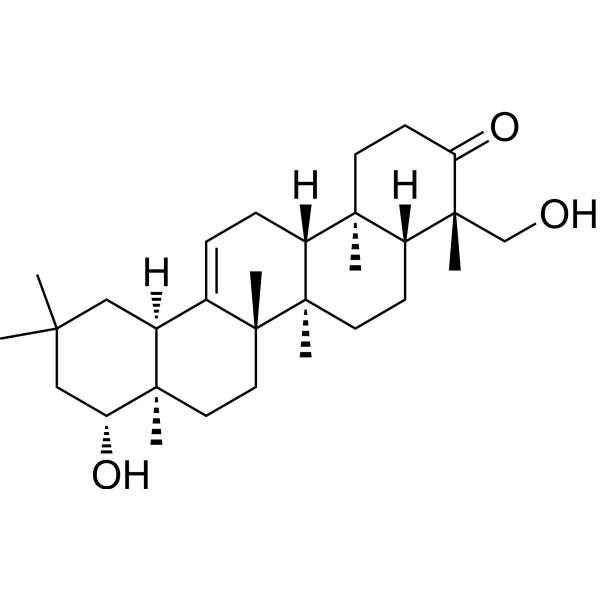 0 ImagesCat. No.: HY-N3301CAS No.: 188970-21-0Melilotigenin C can be isolated from genus Erythrina. Melilotigenin C can be used for research on antiplasmodial activity, antimycobacterial activity and cytotoxicity.
-
Antimalarial agent 30
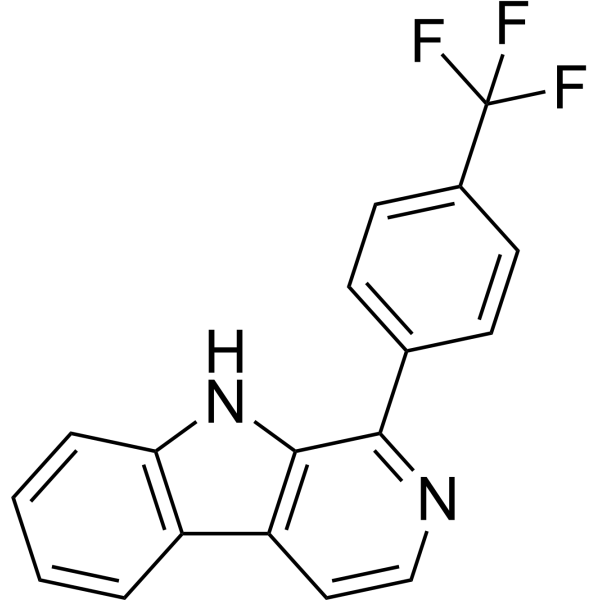 0 ImagesCat. No.: HY-155689CAS No.: 1597425-64-3Antimalarial agent 30 (compound 11) is an antimalarial agent that inhibits P. berghei liver stage parasite load with an EC50 of 5.2 μM.
-
Antimalarial agent 18
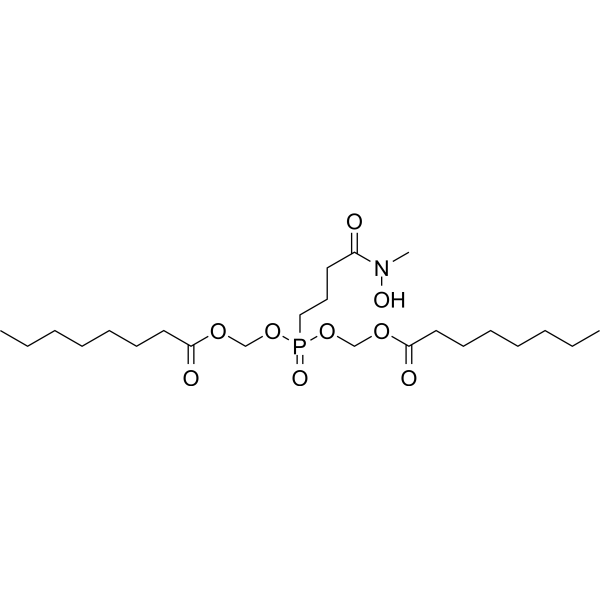 0 ImagesCat. No.: HY-151965CAS No.: 3037689-82-7Antimalarial agent 18 is an potent antimalarial agent, based on electronic, highly lipophilic and siderophoric properties. Antimalarial agent 18 belongs to acyloxymethyl series, as a fosmidomycin surrogate, which is potent IspC inhibitor against the non-mevalonate isoprenoid biosynthesis pathway. Antimalarial agent 18 inhibits P. falciparum (IC50=50 nM) and A. baumanii (IC50=390 nM).
-
RUPB-61
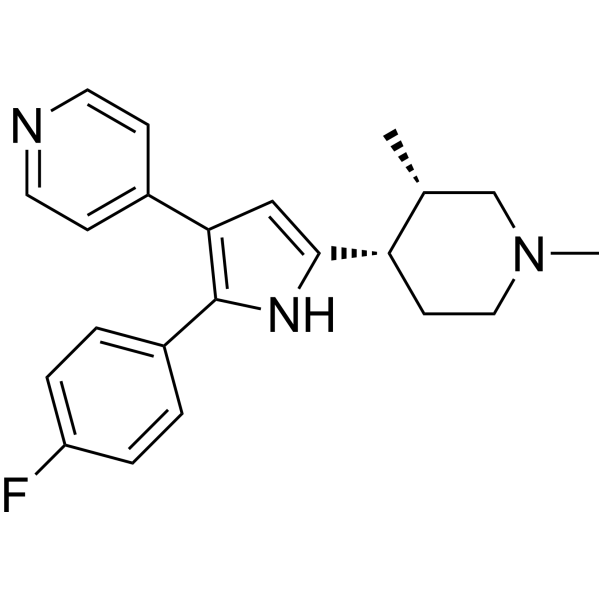 0 ImagesCat. No.: HY-161309CAS No.: 3032827-64-5RUPB-61 is a potent Plasmodium falciparum cGMP-dependent protein kinase (PfPKG) inhibitor with an IC50 value of 13 nM. RUPB-61 shows antiparasitic activity.
-
Tuberostemonine (Standard)
 0 ImagesTuberostemonine (Standard) is the analytical standard of Tuberostemonine. This product is intended for research and analytical applications. Tuberostemonine is a stenine alkaloid that can be isolated from Stemona tuberosa and Stemona sessifolia. Tuberostemonine is an antimalarial agent that has inhibitory activity Ferredoxin-NADP+ reductases (FNRs) from Plasmodium falciparum (PfFNR). Tuberostemonine has a level of activity as a feeding deterrent .
-
D-Arabinose (Standard)
 0 ImagesD-Arabinose (Standard) is the analytical standard of D-Arabinose. This product is intended for research and analytical applications. D-Arabinose is is an orally active antidepressant and a growth inhibitor of C. elegans (IC50 is 7.5 mM). D-Arabinose can penetrate the blood-brain barrier, selectively interfere with the metabolism of D-ribose and D-fructose, and inhibit the growth of nematodes. D-Arabinose can also inhibit the synthesis of cell biofilm and exert antibacterial activity. D-Arabinose activates the ACSS2-PPARγ/TFEB-CRTC1 axis through the lysosomal AXIN-LKB1-AMPK pathway, inducing CRTC1 transcription, exerts antidepressant-like activity. D-Arabinose is the ring-opened form of the aldopentose D-?Arabinose (HY-N7082).
-
RyRs activator 1
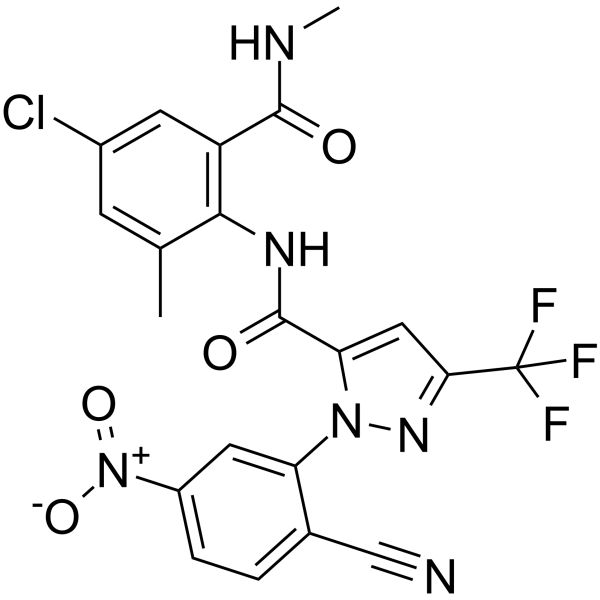 0 ImagesCat. No.: HY-146109CAS No.: 2571579-14-9RyRs activator 1 (compound 7f) is a potent activator of ryanodine receptors (RyRs). RyRs activator 1 at 0.5 mg/L displays 100% larvicidal activity. The larvicidal activity of RyRs activator 1 is 90% at 0.01 mg/L.
-
6-Methyl-5,6-dihydro-2H-pyran-2-one
 0 Images6-Methyl-5,6-dihydro-2H-pyran-2-one is a heterocyclic compound with antitumor, antifungal, antimicrobial, anti-inflammatory, antistress, antibiotic, antituberculosis, antiparasitic, antiviral activities.
-
Pelorol
 0 ImagesCat. No.: HY-N15748CAS No.: 287974-44-1Synonyms: (-)-PelorolPelorol ((-)-Pelorol) is a sesquiterpene found in the tropical marine sponge Dactylospongia elegans. Pelorol has weak antitrypanosomal activity with an IC50 of 17.4 μg/mL and antiplasmodial activity against Plasmodium falciparum clones K1 and NF54 with IC50 values of 786 ng/mL and 1911 ng/mL, respectively. Pelorol is promising for research of parasitic diseases, such as trypanosomiasis and malaria.
-
Artemisia annua extract
 0 ImagesCat. No.: HY-N20241Artemisia annua extract is an extract of Artemisia Annua, which has antimalarial and anticancer effects.
-
2-Thiophenecarboxaldehyde-d3
 0 ImagesCat. No.: HY-W721828CAS No.: 116201-41-3Synonyms: Thiophene-2-carboxaldehyde-d32-Thiophenecarboxaldehyde-d3 (Thiophene-2-carboxaldehyde-d3) is the deuterium labeled 2-Thiophenecarboxaldehyde (HY-W012941). 2-Thiophenecarboxaldehyde (Thiophene-2-carboxaldehyde) is an antibiotic that exhibits antibacterial and nematicidal activities.
-
Bz-Pro-Phe-Arg-pNA
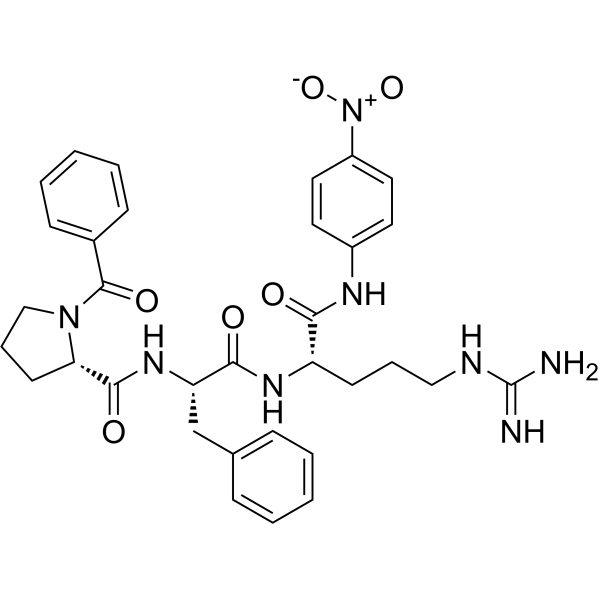 0 ImagesCat. No.: HY-126809CAS No.: 58840-30-5Synonyms: Bz-PFR-pNABz-Pro-Phe-Arg-pNA (Bz-PFR-pNA) is a chromogenic peptide substrate for plasma and glandular Kallikrein, cysteine proteinase (Cruzipain) and Trypsin. Bz-Pro-Phe-Arg-pNA can be used in Factor XII assay.
-
Lettowienolide
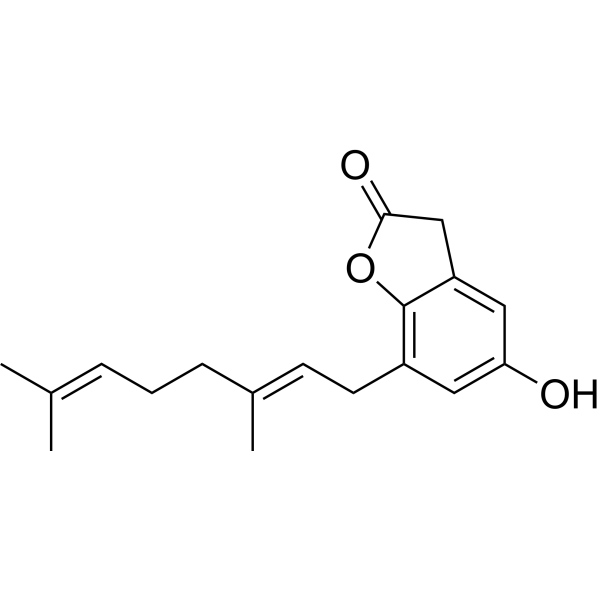 0 ImagesCat. No.: HY-N10928CAS No.: 1189105-39-2Lettowienolide, a geranylbenzoquinonoid, exhibits mild in vitro activity against the Plasmodium falciparum malaria parasite (IC50~20 μg/mL).
-
Eprinomectin (Standard)
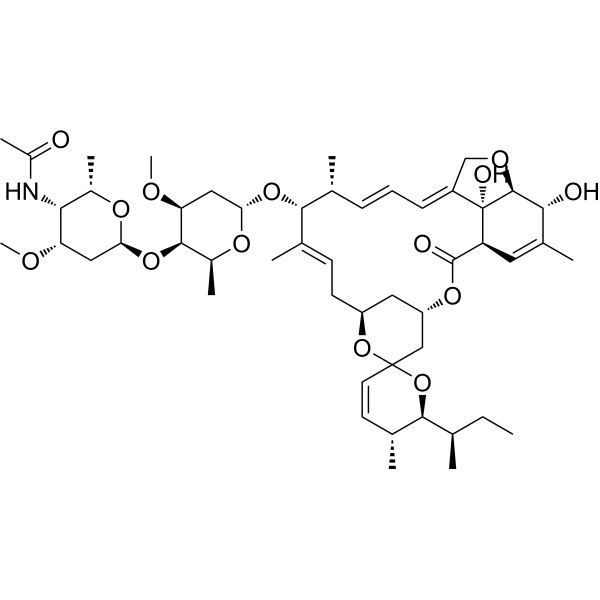 0 ImagesCat. No.: HY-12643RCAS No.: 123997-26-2Synonyms: MK-397 (Standard)Eprinomectin (Standard) is the analytical standard of Eprinomectin. This product is intended for research and analytical applications. Eprinomectin is a type of avermectin. Eprinomectin, as a broad-spectrum fungicide, has insecticidal, insecticidal and acaricidal activities. Eprinomectin induces apoptosis and autophagy in prostate cancer cells and has antitumor activity.
-
Piperaquine tetraphosphate
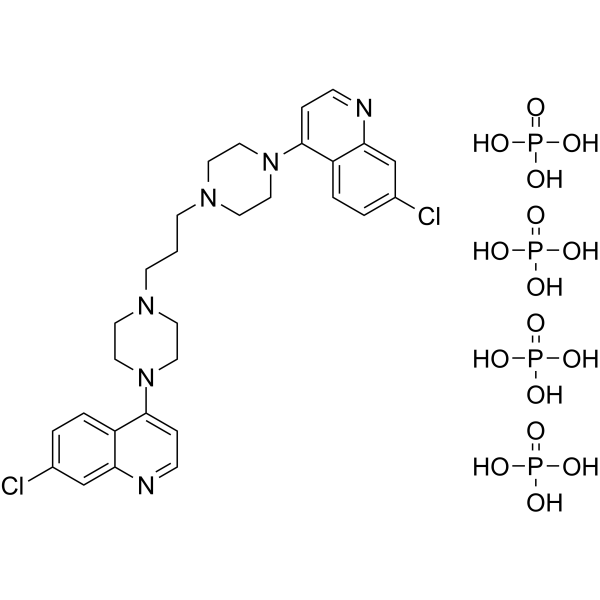 0 ImagesCat. No.: HY-118865CAS No.: 911061-10-4Piperaquine tetraphosphate is a potent antimalaria agent. Piperaquine tetraphosphate shows inhibition for chloroquine-sensitive and the chloroquine-resistant isolates. Piperaquine tetraphosphate in combination with dihydroartemisinin has the potential for the research of chloroquine-resistant malaria.
-
Human α-defensin 5
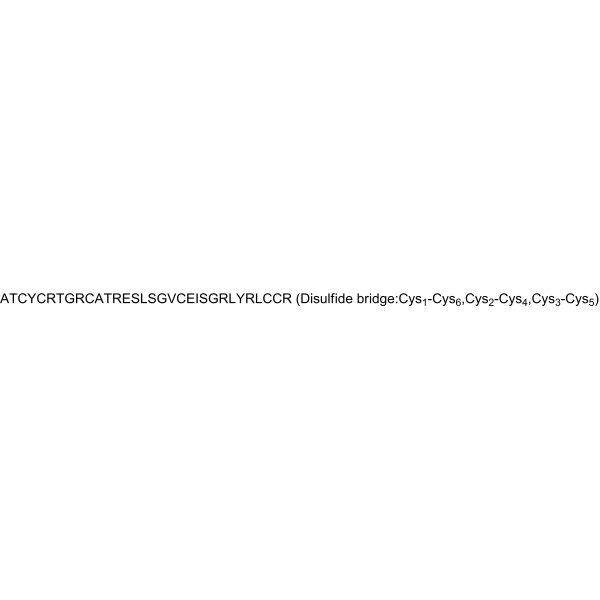 0 ImagesCat. No.: HY-P5694Human α-defensin 5 is an antiviral peptide. Human α-defensin 5 blocks infection of non-enveloped viruses, including AdV, HPV, and polyomaviruses (IC50: 0.6-1.25 μM for HPV16). Human α-defensin 5 can bind to the viral capsid and blocks escape of the virus from the endosome. Human α-defensin 5 increases HIV binding to the cell surface. Human α-defensin 5 also has parasiticidal activity.
-
Crassicauline A (Standard)
 0 ImagesCat. No.: HY-N1924RCAS No.: 79592-91-9Synonyms: Crassicaulin A (Standard)Crassicauline A (Crassicaulin A) Standard is the analytical standard of Crassicauline A (HY-N1924). This product is intended for research and analytical applications. Crassicauline A (Crassicaulin A) is a diester-type diterpenoid alkaloid. Crassicauline A exhibits feeding deterrent activity against adult Tribolium castaneum, with a EC50 of 1134.5 ppm. Crassicauline A induces arrhythmia at a dose of 0.10 mg/kg.
-
Antitrypanosomal agent 8
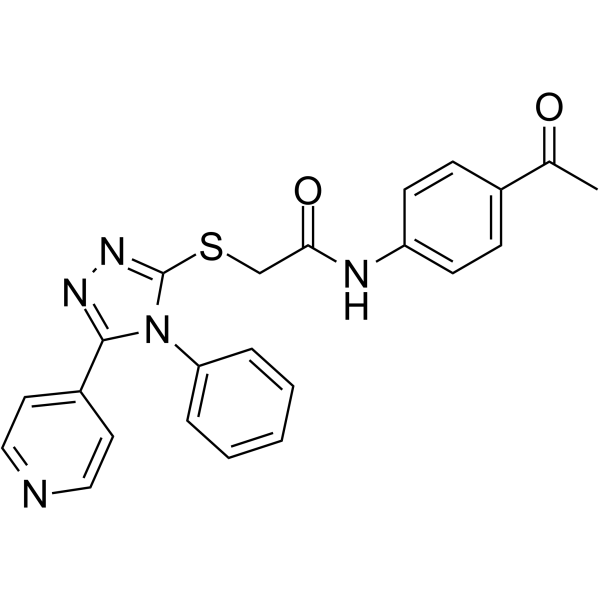 0 ImagesCat. No.: HY-147933CAS No.: 332376-42-8Antitrypanosomal agent 8 (compound 3b) has potent antitrypanosomal activity against Trypanosoma brucei with an IC50 value of 0.79 μM and exhibits certain cytotoxicity in L6 cells (IC50=80.95 μM).



